Chickpea Fried Eggs
Introduction
This recipe, Chickpea Fried Eggs, is a concise exercise in textural contrast and efficient flavor building. It pairs the dense, nutty bite of pan-seared chickpeas with the silk and cream of fried eggs, while sun‑dried tomatoes introduce concentrated acidity and umami. The technique is deliberately simple: controlled browning of legumes, strategic placement of eggs into wells, and a covered finish to set whites while preserving yolk texture. Executed with attention to heat, timing, and surface contact, the dish becomes more than the sum of its parts — a composed, balanced plate that reads as savory, bright, and tactile. The following sections explain why each step exists, how to manage the heat and textures, and how to replicate this dish reliably in a working kitchen.
The culinary logic behind this dish
The recipe relies on two primary culinary principles: Maillard reaction for the chickpeas and gentle coagulation for the eggs. Browning the chickpeas creates complex savory compounds and a dry, slightly crisp exterior; this contrast is necessary to prevent the chickpeas from collapsing into a mushy bed beneath the eggs. Sun‑dried tomatoes provide concentrated acidity and umami to cut through the eggs’ richness, balancing the palate without overpowering. Creating wells and covering the skillet is a deliberate strategy: it localizes eggs for even whites and uses trapped steam to finish the surface without excessive direct heat that would toughen proteins. Salt is applied at the end to control moisture migration and to preserve the chickpeas’ crispness. In short: contrast of textures, layered savoriness, and heat control are the structural logic of the dish.
How to make Chickpea Fried Eggs
Ingredients : 4 large eggs, 1 can chickpeas, drained and rinsed, 1/4 cup sun-dried tomatoes, chopped, Salt and pepper to taste, Olive oil for frying
Directions :
- Heat a skillet over medium heat and add olive oil.,
- Add the chickpeas and cook for about 5 minutes until they start to brown.,
- Stir in the sun-dried tomatoes.,
- Create small wells in the chickpeas and crack an egg into each well.,
- Cover the skillet and cook for about 5-7 minutes, or until the eggs are cooked to your liking.,
- Season with salt and pepper.,
- Serve warm.
Ingredient analysis through a chef’s lens
4 large eggs: Eggs are the structural and flavor centerpiece. The white is primarily albumen proteins that coagulate between roughly 62–80°C; the yolk contains fats and emulsified proteins that set at slightly higher temperatures. Managing the rate of heat transfer prevents rubbery whites and chalky yolks. Use large eggs for predictable volume and cook time.
1 can chickpeas, drained and rinsed: Canned chickpeas offer consistent hydration and a predictable starch matrix. Drain and pat them dry to encourage surface browning; excess water at the pan interface will steam rather than sear. Browning develops Maillard flavors and a firmer exterior while preserving creamy interiors.
1/4 cup sun-dried tomatoes, chopped: These provide concentrated acidity, sweetness, and glutamates that lift and focus the dish. Chopped small, they distribute evenly and release aroma when warmed. If the sun‑dried tomatoes are oil‑packed, treat their oil as additional flavor; if dry, hydrate briefly or allow them to soften on the pan’s residual heat.
Salt and pepper to taste: Salt enhances protein flavors and the chickpeas’ inherent nuttiness; timing of salt matters. Salt applied too early will draw moisture from chickpeas and eggs, reducing crispness. Finishing with salt preserves texture and allows for final adjustment.
Olive oil for frying: Olive oil is the medium for heat transfer and flavor. Use an oil with a clean fruitiness and sufficient smoke point for medium heat. The oil quantity should be enough to create a thin film across the pan for even conduction and to prevent sticking.
Kitchen workflow & technique breakdown
Mise en place is critical. Drain and rinse the chickpeas, then pat them thoroughly with paper towels; surface moisture is the enemy of browning. Chop the sun‑dried tomatoes to a uniform size so they integrate without creating large pockets of acidity. Crack each egg into a small ramekin or bowl; this protects against shell fragments and allows rapid, confident transfer into the wells.
Preheat the skillet to medium heat — you want a stable, even surface temperature. Add the olive oil and allow it to heat until it shimmers but does not smoke; this indicates the oil is mobilized for effective conduction. Add chickpeas in a single layer where possible; agitation is necessary but avoid overcrowding the pan, which will lower the surface temperature and prevent browning.
When the chickpeas begin to brown — typically about five minutes at medium heat — they should offer audible sizzle and a fragrant, toasted aroma. Stir in the sun‑dried tomatoes to allow their sugars and acids to bloom in the residual heat. Use the back of a spoon to create small wells at measured intervals, taking care not to compact the chickpeas; these wells provide a cradle for eggs and stabilize them during cooking.
Crack each egg into its prepared well from a low height to avoid disturbing the surrounding chickpeas. Immediately reduce heat slightly if the skillet feels hot; the objective is a gentle, even coagulation rather than aggressive searing of whites.
Cover the skillet: this is a critical timing control. Covering traps steam and raises the ambient temperature around the eggs, producing a gentle, uniform set. The 5–7 minute window is a guideline — monitor whites for full set with a glossy surface and yolks for the desired level of jiggle. Remove the lid incrementally to inspect rather than leaving it closed for the entire interval.
Texture control, heat management & timing
Texture is the deciding factor for success. The chickpeas should remain toothsome with lightly blistered skins; shriveled or soggy legumes indicate excess moisture or overcooking. Browned exteriors add contrast and opacity to the palate.
Heat management: Begin at medium to medium‑high to achieve Maillard browning on the chickpeas. Once eggs are introduced, lower to medium‑low and use the lid to finish. Direct high heat at this stage will quickly overcook the egg whites and create a tight, chalky mouthfeel. The cover produces an environment where steam sets the whites from above while the pan continues to cook from below — a two‑sided, temperate coagulation.
Timing: The recipe’s 5 minutes for chickpea browning and 5–7 minutes for covered cooking are benchmarks. Variations arise from pan material and size, stove output, and egg temperature. Cast‑iron stores heat and may require lower settings; thin stainless steel heats quickly and may need slightly more time for browning. Use visual cues: chickpeas should be golden with a toasted aroma; whites should be opaque and just set at the edges; yolks should retain a slight dome and wobble if you aim for runny centers.
Professional variations
Without altering the core ingredients or prescribed steps, you can introduce professional technique variations to modulate texture and flavor:
- Basting instead of covering: Tilt the pan and spoon hot oil over the egg whites to finish the tops if you prefer a lightly glossy surface and incremental temperature control. This is a manual alternative to steaming and gives microscopic crisping on the whites.
- Temperature staging: Start with a higher initial heat to accelerate chickpea browning, then lower to a strict medium‑low before adding eggs. This reduces total cooking time while maintaining texture control.
- Oil management: Use a fraction of oil to create point contact for a more pronounced sear on chickpeas; increase film for an even thermal cushion that prevents sticking in lean pans. Adjust by feel rather than measured amounts.
These are technique-focused modifications, not changes to the ingredient list or to the numbered directions.
Finishing touches & plating philosophy
Plating is about clarity and contrast. Reserve a neutral, warm plate to avoid thermal shock that will hasten congealing. Place the chickpeas as a loose bed, maintaining their seared orientation so the browned surfaces are visible. Center the eggs within their wells to preserve the structural intent of the recipe.
Finishing seasoning is decisive: grind fresh black pepper across the eggs to introduce aromatic top notes and add salt sparingly and at the end to retain chickpea texture. A small finishing drizzle of the pan’s flavored oil, if any remains, will add shine and amplify the tomato and olive notes without altering the core ingredients.
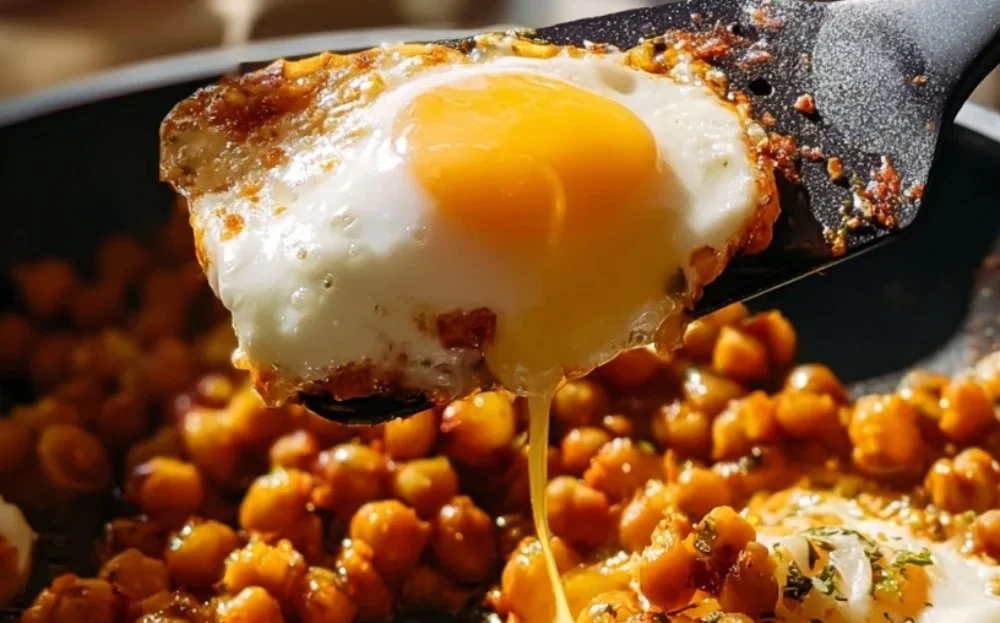
Visually, the glossy egg whites, domed yolks, and rust‑red flecks of sun‑dried tomato create appealing contrast. Arrange to expose browned chickpea facets so each bite combines crisped legume, concentrated tomato, and delicate egg — that is the intended tasting order.
Maintaining quality after cooking
This preparation is best served immediately. The crisped chickpea exterior will soften as it sits due to moisture equilibration. If holding briefly, transfer the skillet to a 90–100°C oven to maintain temperature without further cooking the eggs. Avoid refrigeration if serving within an hour; cold storage collapses textures.
For longer storage, separate components: chill chickpeas and eggs individually. Reheat chickpeas in a 200°C oven or under a broiler to restore surface texture, and reheat eggs gently in a covered skillet with a tablespoon of water — steam for 30–60 seconds to rewarm without overcoagulating.
Quality control: avoid microwaving assembled portions; it homogenizes texture and yields rubbery whites and chalky yolks. The dish’s character depends on retained contrasts, so reheating method matters.
Questions from home cooks (chef answers)
Q: Can I use dried chickpeas? A: Yes, but they must be fully cooked and drained. Dried beans require soaking and long cooking until tender; once cooked, cool and pat dry before browning. Their texture will be slightly different from canned due to variability in hydration, so adjust browning time accordingly.
Q: My whites set too quickly — how do I avoid overcooking? A: Reduce the direct pan heat when eggs are added and rely on the lid to provide ambient steam for top cooking. Also, use room‑temperature eggs if possible; cold eggs exposed to hot pan create a larger temperature gradient that can tighten the whites rapidly.
Q: The chickpeas turned out soft — what went wrong? A: Excess surface moisture prevents Maillard reaction. Ensure thorough draining and drying. Also avoid overcrowding the pan; work in an appropriately sized skillet so legumes contact the hot surface.
Q: Should I salt at the beginning? A: Salting early draws moisture from proteins and legumes, which can inhibit browning and create a wet texture. Season at the end to preserve crisping and to taste-adjust.
Final chef notes
This Chickpea Fried Eggs recipe exemplifies how minimal ingredients yield depth when technique is prioritized. Browning, gentle steam finishing, and thoughtful sequencing of salt and heat control transform simple components into a composed plate. Respect the timing benchmarks and adjust for your equipment; use visual and tactile cues rather than strict clocks. The dish rewards precise handling: a firm, toasted chickpea, bright concentrated tomato, and an egg with a tender white and yielding yolk produce an efficient and satisfying plate suitable for breakfast, lunch, or a light dinner. Execute with intention and the result will be consistent, flavorful, and texturally compelling.
Conclusion
For alternative takes and additional technique notes, consult this Smoky Chickpea Fried Eggs (4 Ingredients) | Live Eat Learn, which explores a smoky profile; the Chickpea Fried Eggs Recipe at The New York Times offers a tested home‑cook approach with helpful visuals; and for a different egg and chickpea pairing technique, see Garlic Scrambled Eggs with Chickpeas – Grumpy’s Honeybunch for inspiration on integrating garlic and texture contrasts.
Chickpea Fried Eggs
Ingredients
Method
- Heat a skillet over medium heat and add olive oil.
- Add the chickpeas and cook for about 5 minutes until they start to brown.
- Stir in the sun-dried tomatoes.
- Create small wells in the chickpeas and crack an egg into each well.
- Cover the skillet and cook for about 5-7 minutes, or until the eggs are cooked to your liking.
- Season with salt and pepper.
- Serve warm.