Viral Trader Joe’s Dumpling Bake
Introduction
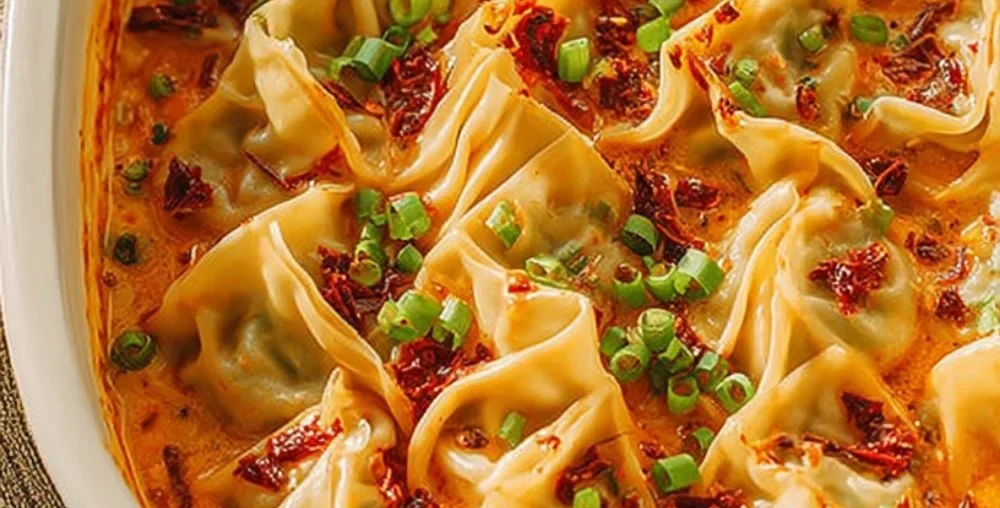
This preparation, titled Viral Trader Joe’s Dumpling Bake, transforms frozen, store-bought dumplings into a composed, texturally complex bake that balances crispness, caramelization, and a concentrated sauce finish. The recipe leverages the convenience and consistent formulation of Trader Joe’s dumplings while employing classical techniques—searing, deglazing, braising, and high-heat finish—to amplify flavor and texture. The approach is deliberately technical: each manipulation of heat, fat, and moisture is intended to produce contrasts of crunchy edges and tender interiors, an integrated glaze, and layered aromatics without compromising the dumplings’ filling integrity.
The culinary logic behind this dish
At its core this dish is an exercise in converting a frozen product into something that reads as freshly composed. Frozen dumplings are engineered with a delicate dough and a hydrated filling; direct high heat risks drying the interior or tearing the wrapper. The culinary logic is to first establish a Maillard crust on the dumpling exterior through pan-searing, which generates savory, roasted aromas and flavor precursors. Following that, a short, controlled braise with a judicious amount of liquid softens the wrapper where needed while keeping the interior moist; finishing in dry oven heat concentrates the sauce and crisps the tops.
Balancing moisture and heat is paramount. The sauce components—soy, vinegar, a touch of sweetener, and sesame oil—perform specific functions: soy provides glutamate-driven umami; rice vinegar brightens and cuts through fat; a small sweetener encourages caramelization during the oven finish; sesame oil contributes toasted, aromatic lift. Butter and neutral oil act as heat transfer agents and flavor carriers: butter enriches the browning reaction while neutral oil raises the smoke point for searing. This method is compatible with different dumpling fillings because it focuses on exterior transformation while protecting the interior with careful temperature progression.
For related contemporary preparations and trends in composed, convenience-based dishes, consult this collection of viral recipes, which apply similar logic to other packaged ingredients.
How to make Viral Trader Joe’s Dumpling Bake
This section lays out the recipe steps as a sequence. The listed directions must be followed as written; subsequent sections discuss technique, timing, and scaling without altering the procedural sequence or ingredient list.
Ingredients :
- 20 Trader Joe’s frozen dumplings (pork or vegetable)
- 2 tablespoons neutral oil (canola or grapeseed)
- 1 tablespoon unsalted butter
- 3 tablespoons low-sodium soy sauce
- 1 tablespoon rice vinegar
- 1 teaspoon honey
- 1 teaspoon toasted sesame oil
- 2 garlic cloves, minced
- 1 tablespoon gochujang or sriracha (optional for heat)
- 1/4 cup water
- 2 scallions, thinly sliced (for garnish)
- 1 tablespoon toasted sesame seeds (for garnish)
Directions :
- Preheat oven to 425°F (220°C).
- Heat neutral oil in a large skillet over medium-high heat until shimmering.
- Add frozen dumplings in a single layer and sear until the bottoms are golden brown, 2–3 minutes.
- Transfer seared dumplings to a baking dish, arranging them snugly.
- In a small bowl, whisk together soy sauce, rice vinegar, honey, toasted sesame oil, minced garlic, gochujang (if using), and 1/4 cup water.
- Pour the sauce evenly over the dumplings and dot the top with butter.
- Cover the baking dish with foil and bake for 12–15 minutes, until dumplings are heated through and the sauce is reduced slightly.
- Remove foil and broil for 2–3 minutes to caramelize the tops and concentrate the sauce.
- Garnish with sliced scallions and toasted sesame seeds before serving.
Ingredient analysis through a chef’s lens
Each ingredient serves a targeted function beyond flavor. The frozen dumplings provide starch, fat, protein, and structural membrane in their wrapper; their water content and filling density dictate the thermal profile needed for safe and optimal heating. Neutral oil gives a high smoke-point medium for searing, enabling a sustained contact temperature that develops a crisp bottom without causing acrid burnt butter notes. Butter is used sparingly to augment browning through its milk solids and to add richness to the sauce during the bake.
Soy sauce is the principal source of umami and salt; choosing low-sodium allows control during finish without over-salting. Rice vinegar acts as an acidifier that brightens the palate and enhances perceived saltiness, which is particularly important when a dish is predominantly savory. Honey supplies a small amount of fermentable sugar to assist with surface caramelization under the broiler; the quantity is intentionally limited to avoid burning. Sesame oil, used at the end as an aromatic enhancer, should not be subjected to high sustained heat because its volatile compounds dissipate; here it flavors the sauce without being the primary frying fat. The optional chili paste provides lactic and fermented heat and assists in glaze adhesion due to its viscosity.
Garnishes—scallions and toasted sesame seeds—introduce fresh, herbaceous aromatics and a final textural counterpoint; their light application preserves the primary flavor matrix while offering contrast.
Kitchen workflow & technique breakdown
Efficiency and control are the pillars of the workflow. Begin with mise en place: have the sauce components measured and whisked, garlic minced, and garnishes prepped. Bring the skillet up to temperature before adding oil—this avoids extended heat exposure that can denature oil and cause uneven browning. Arrange dumplings in a single layer for searing; crowding reduces surface contact and creates steaming instead of browning.
After searing, transferring to a baking dish exposes more surface area to dry heat and enables even sauce distribution. The covered baking step is a controlled braise: it rehydrates any stressed wrapper areas and allows the filling center to gently come to temperature without explosive steam pockets. The final uncovered broil is short and intense—its purpose is to evaporate surface moisture, concentrate glaze elements, and provoke Maillard reactions on already-seared surfaces, producing an integrated, glossy finish.
This sequence—pan sear, braise under foil, then finish under high direct heat—is a proven professional approach for combining crispness with interior tenderness. For reference on how similar techniques are applied to other packaged products and to expand repertoire ideas, refer to this curated list of viral recipes.
Texture control, heat management & timing
Texture control depends on manipulating three variables: contact browning, steam time, and dry finish. Contact browning is achieved by a preheated skillet and a minimal amount of oil; aim for an immediate sizzle on contact and even, golden-brown coloring within 2–3 minutes. Longer sear times will intensify the crust but may begin to overcook thin dough—balance is essential.
The covered bake time (12–15 minutes) is calculated to allow center proteins to reach safe temperature while avoiding a soggy wrapper. Covering traps steam and increases the ambient humidity inside the dish; that is desirable for the rehydration phase but must be followed by sufficient dry heat to evaporate excess surface moisture. The broil step, limited to 2–3 minutes, must be monitored closely—sugars in the sauce caramelize quickly and can transition to burnt within seconds. Position the oven rack to maintain a consistent distance between broiler and surface for predictable results.
Use a probe thermometer if precise doneness is required; aim for internal temperatures appropriate to the dumpling filling (for pork-based fillings, ensure at least 145–160°F depending on local guidelines). Ultimately, prioritize a coordinated sequence: quick, high-heat sear; brief, moist heat braise; and short, intense dry finish.
Professional variations
- Sauce modulation: Replace honey with mirin for a subtler sweetness and deeper fermentation notes; reduce the added water to intensify glaze concentration.
- Aromatic lift: Add thinly sliced ginger to the sauce for a bright, warm counterpoint; include it in the whisked sauce so its volatile oils infuse during the covered bake.
- Crispness alternative: For more widespread crisping, after broiling, transfer dumplings to a very hot cast-iron skillet for a 30–45 second press to accentuate bottom crispness without additional moisture.
- Dietary swaps: Use vegetable dumplings unchanged; reduce or omit butter for a dairy-free finish and increase toasted sesame oil to offset lost richness.
These variations maintain the prescribed sequence and do not alter the fundamental timing or structure of the recipe; they adapt flavor and texture while preserving the same technical logic.
Finishing touches & plating philosophy
Plating should emphasize contrast and clarity. Arrange dumplings compactly to showcase caramelized surfaces; spoon a modest amount of the concentrated sauce around the base to prevent sogginess and to frame the dish visually. Scatter scallions for vertical relief and toasted sesame seeds for tactile punctuation. A restrained drizzle of high-quality toasted sesame oil immediately before service reintroduces aromatic top notes lost to heat and brightens the final aroma.
Serve on a warm plate to maintain temperature consistency. If presenting family-style, pour the sauce into a small serving vessel to allow guests to modulate glaze intensity; if presenting individually, use the sauce sparingly so that each dumpling retains textural definition.
Maintaining quality after cooking
Dumplings are best consumed immediately: the contrast between the crisp exterior and the tender interior is most pronounced within minutes of finishing. If holding is necessary, keep covered in a warm (not hot) oven at 140–150°F to prevent fat solidification and wrapper toughening. Avoid stacking, as trapped steam will reverse the textural gains.
For short-term storage, cool to room temperature, then refrigerate in a single layer with a light film of sauce separated; reheat in a 400°F oven or in a cast-iron skillet with a splash of oil to reestablish crispness. Microwave reheating will sacrifice texture and is not recommended when maintaining quality is a priority.
Questions from home cooks (chef answers)
Q: Can I skip the sear and just bake from frozen?
A: Skipping the sear eliminates the initial Maillard imprint that contributes caramelized flavor and textural contrast. Baking from frozen will heat the dumplings but result in a softer, less complex surface; the sear is essential for the intended finish.
Q: My sauce burned under the broiler—how can I prevent that?
A: Reduce broiler time by 30–60 seconds and position the rack further from the element. Use less honey or sugar in the sauce, and ensure the sauce has already reduced during the covered bake so the broil only needs to concentrate and caramelize, not further reduce a large volume.
Q: How do I adapt this for gluten-free dumplings?
A: Technique remains identical; however, gluten-free wrappers can be more fragile. Reduce sear time slightly and increase the covered bake by a minute or two to ensure thorough heating with minimal mechanical stress.
Q: Can I double the recipe in one dish?
A: You may, but avoid overcrowding. Use a larger baking dish and consider searing in batches to maintain even browning; overcrowding causes steaming, which undermines texture.
Final chef notes
This preparation demonstrates how attention to heat sequencing and moisture modulation elevates a convenience product into a composed dish with complex flavors and refined texture. The interplay of fat, acid, and heat drives the sensory outcome: savory depth from searing and soy, bright lift from rice vinegar, and aromatic finish from sesame oil. Precise heat management—short sear, gentle braise, decisive broil—creates the desired exterior-interior relationship. Execute each step deliberately, monitor surface color and aroma during high-heat finishes, and prioritize immediate service to preserve the textural contrasts established through the technique.
Viral Trader Joe's Dumpling Bake
Ingredients
Method
- Preheat oven to 425°F (220°C).
- Heat neutral oil in a large skillet over medium-high heat until shimmering.
- Add frozen dumplings in a single layer and sear until the bottoms are golden brown, about 2–3 minutes.
- Transfer seared dumplings to a baking dish, arranging them snugly.
- In a small bowl, whisk together soy sauce, rice vinegar, honey, toasted sesame oil, minced garlic, gochujang (if using), and 1/4 cup water.
- Pour the sauce evenly over the dumplings and dot the top with butter.
- Cover the baking dish with foil and bake for 12–15 minutes, until dumplings are heated through and the sauce is reduced slightly.
- Remove foil and broil for 2–3 minutes to caramelize the tops and concentrate the sauce.
- Garnish with sliced scallions and toasted sesame seeds before serving.