Chocolate Peanut Butter Squares
Introduction
This recipe — Chocolate Peanut Butter Squares — is a study in simple ingredient synergy rendered through precise technique. The combination of a nut-rich base and a glossy chocolate cap is deceptively straightforward, yet the final product depends on controlled emulsification, particle size management, and temperature discipline. As a chef, I approach this as a composed confection: each component must be balanced for fat, sugar, and texture to produce clean squares that cut well, hold shape, and deliver layered flavor on the bite.
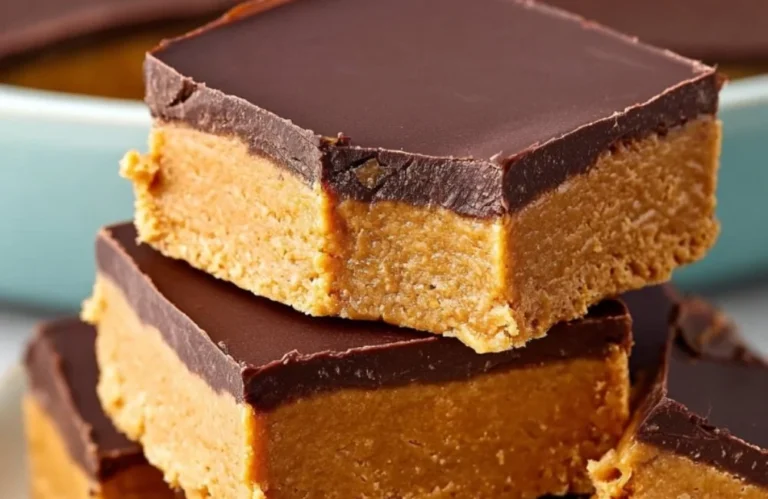
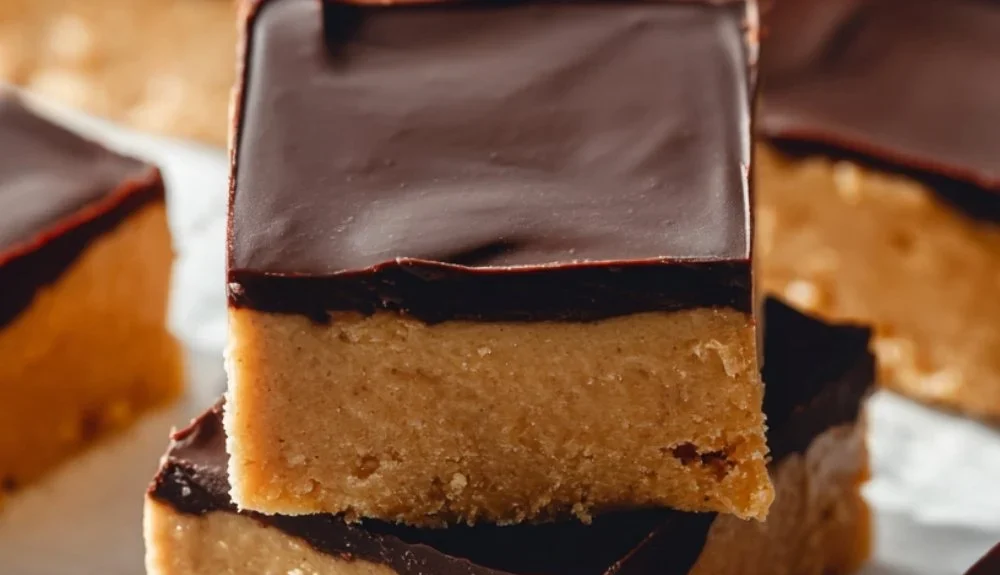
The objective is to create a compact peanut-butter matrix with a tender, yet firm mouthfeel, finished with a unctuous chocolate layer that sets with a fine sheen and slight snap at the edge. This article dissects the recipe to explain why each step matters, how to control textural outcomes, and how to manage kitchen workflow so the process is efficient and repeatable.
The culinary logic behind this dish
At its core, Chocolate Peanut Butter Squares is a no-bake assembly where structure is achieved by fat crystallization and mechanical binding rather than heat-induced gluten development or starch gelatinization. Peanut butter and butter supply a continuous fat phase that coats dry particles (powdered sugar and graham crumbs). The powdered sugar functions as both sweetener and a hygroscopic binder: its fine particle size integrates smoothly with the fats, contributing to a dense but tender body. Graham cracker crumbs provide particulate structure and a subtle toasty note that offsets the richness.
The chocolate layer performs multiple roles: it provides a contrasting texture, seals the surface to retard oxidation of the fats, and contributes cocoa complexity that balances peanut sweetness. Successful execution requires attention to emulsion stability in the peanut-butter mixture and careful temper-like consideration when melting the chocolate so the topping sets without bloom or a greasy surface.
How to make Chocolate Peanut Butter Squares
This section reproduces the recipe directions exactly and follows with technical notes on executing each step.
Ingredients : 1 cup peanut butter, 1/2 cup butter, softened, 1 cup powdered sugar, 1 cup graham cracker crumbs, 1 cup chocolate chips
Directions :
- In a mixing bowl, combine the softened butter and peanut butter until smooth., 2. Gradually add the powdered sugar and graham cracker crumbs, mixing until well combined., 3. Press the mixture into a greased 8×8 inch pan., 4. Melt the chocolate chips and pour them over the peanut butter mixture, spreading evenly., 5. Refrigerate for at least 2 hours until set., 6. Cut into squares and serve.
Step-by-step execution notes:
- Step 1: Combine softened butter and peanut butter until smooth. Aim for a homogeneous emulsion. Use a paddle attachment or a sturdy spatula; overworking with high-speed mixers will warm the fats, risking a softer final texture. The goal is uniform dispersion of peanut solids in the fat matrix without entraining excess air.
- Step 2: Gradually incorporate powdered sugar and graham crumbs. The order and rate of addition matter: adding dry ingredients slowly ensures even hydration of the powdered sugar by the fats and prevents grit or dry pockets. Use folding motions to finish; minimal mechanical shearing preserves a compact crumb structure.
- Step 3: Press into a greased 8×8 pan. Evenness of compaction affects both texture and appearance. Use a flat-bottomed bench scraper or a small straight-sided measuring cup to compact the base uniformly; avoid over-compressing, which will make the squares too dense and reduce tenderness.
- Step 4: Melt chocolate chips and pour over. Melt gently—either in short microwave bursts at 50% power with stirring between cycles, or over a bain-marie with the bowl off direct steam. The objective is glossy, fluid chocolate for an even pour without overheating which can cause thickening or graininess.
- Step 5: Refrigerate for at least 2 hours. Adequate chilling allows the fat matrix to firm and the chocolate to set properly. Rapid chilling is acceptable but avoid freezing which can induce condensation upon thawing and degrade surface appearance.
- Step 6: Cut into squares. Use a sharp chef’s knife warmed under hot water and wiped dry between cuts for clean edges.
Ingredient analysis through a chef’s lens
Peanut butter: Choose a smooth, stable peanut butter with a balanced oil-to-solid ratio. Natural peanut butter with separated oil will require additional mixing and can yield a looser matrix; commercial stabilized peanut butter usually provides predictable texture and binding ability.
Butter: Softened butter contributes milk solids and a different melting profile than peanut fat, improving mouthfeel and helping the base set at refrigerator temperatures. The 1:2 ratio of butter to peanut butter moderates the intensity of peanut flavor while contributing pliability.
Powdered sugar: Its fineness dissolves into the fat phase more readily than granulated sugar, creating a smoother mouthfeel. It also contains a small amount of anti-caking agent that improves texture consistency.
Graham cracker crumbs: Provide both aromatic contribution and physical structure. The particle size influences mouthfeel: finer crumbs give a more homogeneous texture, while coarser crumbs yield a slight graininess and perceived crunch. Adjusting the crumb size within the given measurement can subtly change the final texture without altering ingredient quantities.
Chocolate chips: Typically formulated to hold shape, chips can be less ideal for perfectly glossy melts than couverture chocolate. They will melt sufficiently if managed carefully, but expect a slightly softer set and less mirror shine than tempered chocolate. Use dark or semi-sweet to balance sweetness from base.
Kitchen workflow & technique breakdown
An efficient workflow reduces time and temperature swings that affect texture. Sequence tasks so that chilling starts as soon as the chocolate is poured. Recommended order:
- Measure and prepare dry ingredients and tools first (powdered sugar sifted if necessary, graham crumbs measured).
- Soften butter to a spreadable consistency at room temperature; avoid over-softening.
- Combine fats and mix to homogeneity in one container.
- Integrate dry ingredients with folding motions, then transfer immediately to the pan and compress.
- Melt chocolate just prior to finishing base to avoid the chocolate cooling while waiting.
Temperature control is critical. Keep the room cool if possible; ambient heat will accelerate softening. Work with a cooled metal pan for the base if you need faster setting, but allow the base enough time to equilibrate so that the chocolate does not crack from thermal contraction differences.
Texture control, heat management & timing
Texture is governed by fat ratios, particle size, and chilling time. The butter increases the solid fat content that firms at refrigeration temperatures while peanut butter provides a lower melting point for creaminess on the palate. To achieve a base that cuts cleanly, ensure the fats are not overheated during mixing. Warm fats will redistribute and may yield greasy surfaces or soft centers.
When melting chocolate, aim for 45–50°C (113–122°F) for semisweet to fully liquefy, then cool slightly to 30–32°C (86–90°F) before pouring if you prefer better set and less bloom; this is a partial-tempering control without formal tempering. If you cannot measure temperature, rely on visual cues: fully liquefied, glossy, and free of lumps. Pour when fluid but not hot to the touch; pouring excessively hot chocolate into a cool, compacted base can cause localized condensation and potential fat migration.
Refrigeration time of at least 2 hours allows recrystallization of fats and full chocolate set. For best cutting, chill an additional hour if your refrigerator is warm or if you used softer spreadable peanut butter.
Professional variations
Within the constraints of the recipe’s measurements, there are professional techniques to refine the product without altering ingredient proportions:
- Use finely ground graham crumbs to create a more ganache-like base; process crumbs to a near-powder for a smoother texture.
- Swap chocolate chips for chopped couverture and temper properly for a crisper snap and superior shine. This maintains the ingredient list requirement if you simply substitute types of chocolate without changing the measurement.
- For a layered flavor, sprinkle a thin dusting of flaky sea salt on the chocolate while it is just beginning to set to enhance contrast.
- For textural contrast, press a ring of finely chopped roasted peanuts into the base before pouring chocolate; this does not change quantities of listed ingredients but adds structure and crunch.
Finishing touches & plating philosophy
The squares should present with a uniform top and clean edges. For precision, trim edges before cutting to create rectangles of identical size. Use a warmed, dry knife for each cut to avoid ragged edges. Finish with minimal garnishes: a single flake of Maldon salt or a fine drizzle of slightly warm chocolate for an elevated presentation. Avoid heavy decoration that competes with the core flavors.
Plating should emphasize balance: serve in small portions to match the richness, arranged on neutral-toned plates to highlight the color contrast between the dark chocolate and golden base. Allow 1–2 minutes at room temperature after plating so the chocolate softens slightly and aromas become more pronounced.
Maintaining quality after cooking
Storage: Keep squares in an airtight container in the refrigerator to maintain structural integrity; the fat matrix is sensitive to room temperature and will soften significantly at 20–22°C (68–72°F). For longer storage, freeze for up to one month; thaw in the refrigerator overnight to avoid condensation on the chocolate surface.
Cabinet hazards: Avoid storing near strong-smelling foods; both peanut butter and chocolate readily absorb external aromas. Also, prevent temperature cycling which causes chocolate bloom and a dull finish.
Shelf life: When refrigerated, expect optimal quality for 5–7 days. Freezing halts degradation but can alter texture slightly upon thawing due to ice crystal formation in any residual moisture.
Questions from home cooks (chef answers)
Q: My base was crumbly and didn’t hold together. What went wrong? A: Crumbling indicates insufficient fat-to-dry ratio or under-mixing. Ensure the butter and peanut butter are fully combined and the powdered sugar is incorporated evenly. Press the mixture firmly into the pan to create cohesive contact between particles.
Q: The chocolate topping is streaky or dull. How do I fix that? A: Overheating or seizing of the chocolate is the usual cause. Melt chocolate gently and stir continuously. If streaking occurs, rewarm gently with a small dab of neutral oil or a few additional un-melted chocolate pieces to smooth the emulsion, then cool slightly before pouring.
Q: The edges are oily after refrigeration. Is that fat migration? A: Yes. Fat migration can occur when the base and topping have disparate fat chemistries and are stored at fluctuating temperatures. Maintain consistent refrigeration and avoid thaw-freeze cycles.
Q: Can I make this ahead? A: Yes. Prepare the squares up to a week refrigerated or several weeks frozen. For best texture, bring to cool room temperature (not warm) 10–15 minutes before serving.
Final chef notes
This recipe is an exercise in restraint: with just five ingredients, technique dictates outcome. Focus on emulsion quality in the base, particle control with the graham crumbs, and gentle heat management with the chocolate. Small adjustments in compaction, crumb fineness, and chocolate handling will noticeably alter mouthfeel and presentation while keeping the ingredient list intact. Execution is repeatable when you control temperature and sequence.
Consistency and patience yield squares that cut cleanly, present with a glossy top, and deliver immediate, layered flavor — the hallmark of disciplined confectionery technique.
Conclusion
For reference and additional methods that align with this approach, consider consulting established recipes that explore similar techniques: No-Bake Chocolate Peanut Butter Bars – Sally’s Baking, Peanut Butter Bars Recipe, and Chocolate Peanut Butter Bars – RecipeTin Eats. These sources offer complementary techniques and variations that can inform refinements to the method described above.
Chocolate Peanut Butter Squares
Ingredients
Method
- In a mixing bowl, combine the softened butter and peanut butter until smooth.
- Gradually add the powdered sugar and graham cracker crumbs, mixing until well combined.
- Press the mixture into a greased 8x8 inch pan.
- Melt the chocolate chips and pour them over the peanut butter mixture, spreading evenly.
- Refrigerate for at least 2 hours until set.
- Cut into squares and serve.