Low Calorie Greek Yogurt Brownies
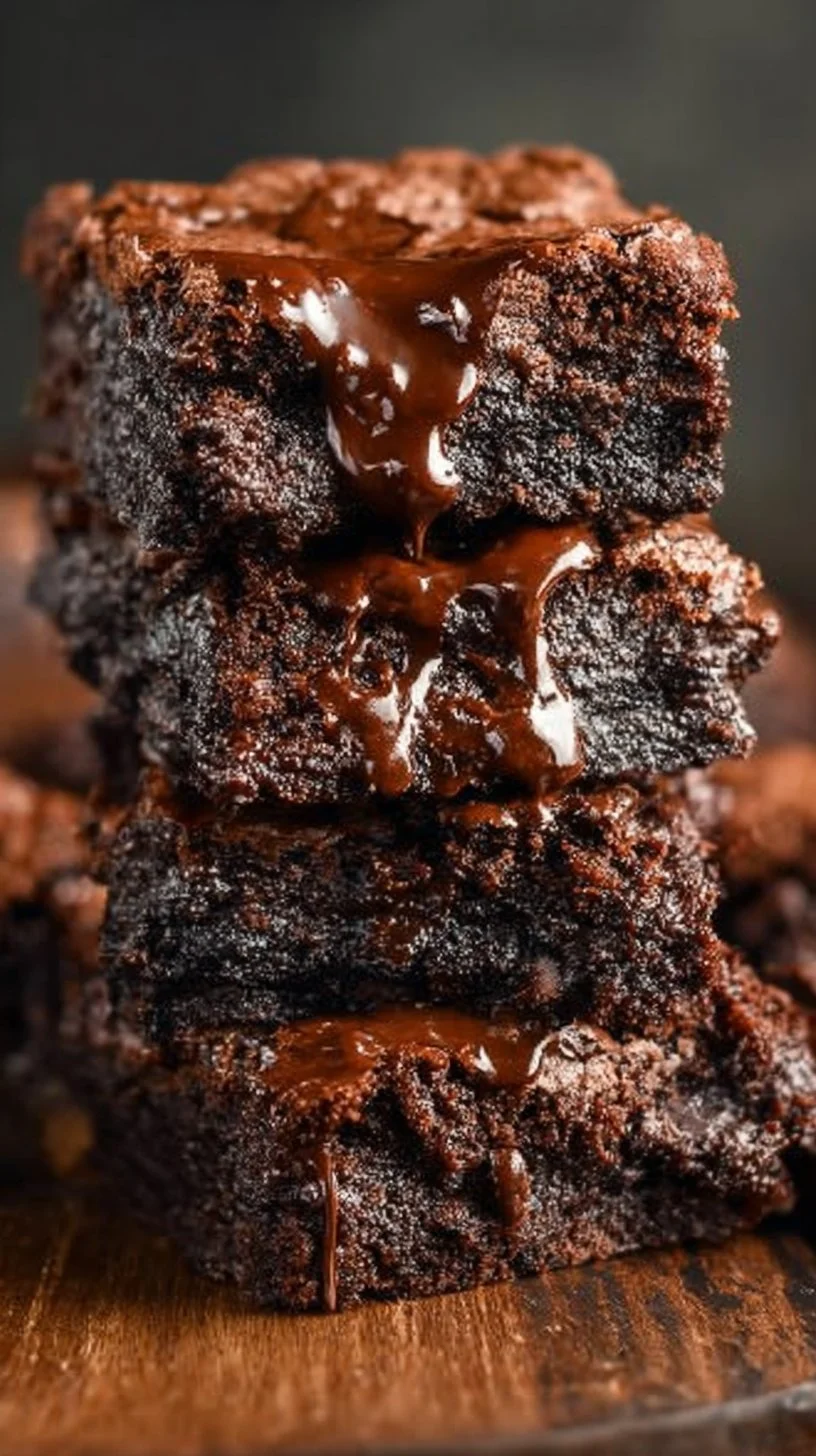
This Low Calorie Greek Yogurt Brownies recipe reduces fat and increases protein without sacrificing the concentrated cocoa flavor and compact, fudgy texture that define an exemplary brownie. The formula relies on a small set of ingredients and tight technique: Greek yogurt as the primary fat-and-moisture contributor, almond flour for structure with minimal starch, and a modest raising agent to control lift. If you prefer a different chocolate balance or presentation, consult an alternate method for coating and garnish such as the refined approach in this guide to chocolate-covered strawberry brownies, which illustrates how finishing techniques complement simple batters.
The culinary logic behind this dish
At its core this recipe is an exercise in concentration and balance. Traditional brownies derive richness from butter and chocolate; here Greek yogurt replaces much of the fat but retains mouthfeel through protein and moisture. Cocoa powder delivers intense flavor with no additional fat, while almond flour supplies tenderness and a delicate crumb without the gluten network created by wheat flour. The baking powder provides controlled lift but at a reduced quantity to prevent cake-like aeration; we want a dense, slightly springy crumb rather than a light sponge.
Sensory objectives drive each ingredient selection. The yogurt’s lactic tang brightens the bitter cocoa and tempers sweetness so the final palate reads as chocolate-first, not syrupy. The small amount of sugar or substitute establishes sweetness without masking the cocoa’s complexity. Salt tightens the flavor, and vanilla rounds the aroma. The chef’s task is to coax maximum flavor depth from minimal fat—through heat control, mixing discipline, and precise bake timing.
How to make Low Calorie Greek Yogurt Brownies
Follow the recipe sequence exactly as written; restraint in mixing and careful heat management are the determinants of success. The procedure emphasizes combining wet components to a homogenous emulsion before gently folding in dry ingredients. That order prevents overworking the batter while ensuring even distribution of cocoa, leavening, and almond flour. In the oven, watch for color changes around the edges and a slightly shiny surface center—those cues indicate the protein-set crumb is complete without overt drying.
Ingredients :
1 cup Greek yogurt, 1/2 cup cocoa powder, 1/2 cup sugar or sugar substitute, 1/4 cup almond flour, 1/2 tsp baking powder, 1/4 tsp salt, 1/2 tsp vanilla extract, 2 large eggs
Directions :
- Preheat the oven to 350°F (175°C). Grease a baking pan.
- In a large bowl, mix Greek yogurt, sugar, and vanilla until combined.
- Add in eggs, and mix until smooth.
- In another bowl, whisk together cocoa powder, almond flour, baking powder, and salt.
- Gradually add the dry ingredients to the wet ingredients, mixing until just combined.
- Pour the batter into the prepared baking pan and smooth the top.
- Bake for 20-25 minutes, until a toothpick inserted in the center comes out clean.
- Cool, cut into squares, and enjoy your healthy brownies!
Ingredient analysis through a chef’s lens
Greek yogurt functions as the structural and textural backbone. Its proteins coagulate under heat, creating a network that lends firmness while retaining moisture; this is why the recipe uses two eggs—not merely for lift, but to strengthen the matrix so the finished brownie slices cleanly. Cocoa powder supplies concentrated chocolate aromatics without increasing fat; because it is dry, it also helps control batter viscosity. The almond flour offers small fat droplets that coat protein strands and interrupt toughness, yielding a delicate, slightly granular crumb that is true to nut-based batters.
Baking powder is deliberately sparse—its role is to produce a subtle rise that keeps the interior from collapsing during cooling, not to aerate the brownie into cakiness. Salt is small in quantity but pivotal: it amplifies chocolate compounds and balances perceived sweetness. Vanilla is aromatic support, not dominant; it lifts the cocoa’s volatile bouquet so the nose reads as warm and chocolate-forward.
Kitchen workflow & technique breakdown
- Mise en place: measure ingredients precisely; weighing almond flour and cocoa is preferable for consistency. Preheat the oven and prepare the pan first so the heat ramp is stable when the batter is ready.
- Wet-phase emulsification: mixing yogurt, sugar, and vanilla until combined creates a uniform base. If sugar granules are not fully dissolved, they can create tiny pockets that cause uneven browning; ensure you stir until smooth before adding eggs.
- Egg incorporation: add eggs one at a time, or together if your whisking is vigorous; the objective is to produce a glossy, homogeneous mass. Overbeating at this stage can incorporate excess air, which will expand and then collapse, causing cracks and a drier texture.
- Dry-phase integration: whisking the dry ingredients separately ensures the baking powder and salt are evenly dispersed. When adding dry to wet, fold gently and stop as soon as streaks disappear. Overmixing develops remaining proteins and damages the delicate almond flour particles, yielding a less tender crumb.
- Pan handling: pour and smooth to an even thickness; this promotes uniform bake and color. A thin, offset spatula will minimize surface tension and avoid trapping air that can create domes.
- Bake monitoring: set a timer for the lower end of the range and observe color and surface sheen. A clean toothpick indicates doneness for this batter; however, moist fragments on a probe can still mean a fudgier center. Aim for a clean or nearly clean toothpick for firm slices.
Texture control, heat management & timing
Control of heat and timing governs whether the brownie finishes fudgy or dry. Because the recipe lacks substantial butter, residual moisture from yogurt and eggs is the only buffer against dryness. Bake at the stated 350°F (175°C) for 20 minutes and begin checking at 18 minutes with a clean toothpick centered into the deepest part. If the exterior is well-colored and the center yields a few moist crumbs but does not flow, remove the pan and allow carryover cooking to finish the set during cooling. Excess baking will evaporate moisture and convert the appealing chew into an undesirable firmness.
Oven variability is a practical consideration. Convection ovens may brown and dry faster; reduce temperature by 15–20°F or shorten time accordingly. If the pan is shallow, the batter spreads thin and will require less time; a deeper pan increases bake duration. Use color (deep, even cocoa hue), surface texture (slightly glossy center with matte edges), and the toothpick test in combination—never rely on a single indicator.
Professional variations
Without altering ingredient amounts, technique can create perceptible variations in final character. For a more intense, darker profile, use a high-quality Dutch-processed cocoa; expect a smoother, rounder mouthfeel and deeper color. To accentuate nutty notes, toast the almond flour briefly on low heat and allow to cool before using—this amplifies aroma without changing composition. For a more aerated slice, separate the eggs, whip whites to soft peaks, then fold into the batter last; proceed gently to avoid deflation while obtaining greater lift. If a pan-to-pan presentation is desired, line the pan with parchment and allow a slight overhang for clean removal and sharper edges.
For portioning and presentation styles, this batter supports thin bars, small squares, or cutouts with a cookie cutter once cooled. If you wish to add a glaze or ganache, warm a minimal amount of dark chocolate with a teaspoon of neutral oil and brush thinly; this adds flavor without negating the recipe’s low-calorie intent.
Finishing touches & plating philosophy
Finishing should highlight the concentrated chocolate and the brownie’s clean, compact texture. A light dusting of sifted cocoa or a few flakes of Maldon salt on each square enhances aroma and delivers a refined contrast against the dense interior. Avoid heavy frostings that overwhelm the delicate protein-driven structure. For plating, arrange squares with slight overlap on a matte plate to emphasize the brownie’s dense, glossy surface; accent with a small quenelle of unsweetened whipped yogurt or a single poached berry if a contrasting acidic element is desired.
Temperature at service matters: slightly cooler-than-room-temperature slices sharpen the flavor perception of cocoa; overly warm pieces mask complexity with aggressive dairy notes. If serving with a beverage, choose a medium-bodied coffee or a restrained black tea to complement rather than compete.
Maintaining quality after cooking
Storage strategy preserves texture and flavor. Cool the brownies completely in the pan to allow the protein network to stabilize; slicing while warm encourages crumbling and moisture migration. Store in an airtight container at room temperature for up to two days; beyond that, refrigeration will extend shelf life but can modify texture, making them firmer and less tender. To revive a slightly dry specimen, warm gently for 8–10 seconds in a microwave or 4–6 minutes at 300°F (150°C) in a compact oven with a bowl of water to reintroduce moisture through steam.
For longer-term storage, freeze in single-layer wrapped portions separated by parchment. Thaw slowly at refrigerator temperature to avoid condensation on the surface. If you are adapting plating or portion techniques from other small-batch brownie preparations, review guidance such as the structural considerations in this lemon brownies resource to inform freeze/thaw behavior.
Questions from home cooks (chef answers)
Q: Will a sugar substitute affect texture?
A: Yes. Sugar contributes to tenderness by retaining moisture and delaying protein coagulation. Many substitutes lack hygroscopic properties; when using one, monitor bake time carefully and accept that crumb and mouthfeel will be slightly different—often firmer.
Q: Can I use regular flour instead of almond flour?
A: Technically yes, but wheat flour will develop gluten and produce a different texture—more cake-like and chewier. If you substitute, reduce quantity slightly and fold gently to limit toughness. The recipe’s calorie and macronutrient profile will change.
Q: Why not use baking soda?
A: Baking soda requires an acidic component to activate (beyond the yogurt’s modest acidity) and produces a different lift and crumb structure. Baking powder gives controlled, balanced leavening appropriate for the batter’s neutral-to-mild acidity.
Q: How do I get a shiny crust?
A: A thin sugar layer on the surface that caramelizes can create a shiny top. This is more common with higher sugar recipes; here, surface sheen is more often the result of properly developed proteins and even heat—avoid overbaking to maintain a subtle gloss.
Final chef notes
Precision and restraint define success with these brownies. Measure, observe, and prioritize texture: underbake slightly for a fudgier interior, but allow carryover to complete structure. Respect the role of each ingredient—Greek yogurt for moisture and tang, almond flour for tenderness, and minimal leavening for control. Small adjustments in technique, not composition, will provide the range of textures and finishes you seek.
Conclusion
For an alternative take on low-calorie Greek yogurt brownies that emphasizes portion control and nutritional labeling, see this detailed adaptation at Greek Yogurt Brownies (Under 100 Calories!) – The Big Man’s World, which explores serving sizes and calorie calculation. If your priority is a minimal-calorie version with a focus on slimmed-down sweetness, review the approach outlined in Greek Yogurt Brownies (Only 49 kcal) – Sweet As Honey for ideas on sugar substitution and portioning. For a protein-forward, gluten-free interpretation and notes on textural outcomes, consult Greek Yogurt Brownies (Gluten Free, High Protein) to compare techniques and ingredient effects.
Low Calorie Greek Yogurt Brownies
Ingredients
Method
- Preheat the oven to 350°F (175°C). Grease a baking pan.
- In a large bowl, mix Greek yogurt, sugar, and vanilla until combined.
- Add in eggs, and mix until smooth.
- In another bowl, whisk together cocoa powder, almond flour, baking powder, and salt.
- Gradually add the dry ingredients to the wet ingredients, mixing until just combined.
- Pour the batter into the prepared baking pan and smooth the top.
- Bake for 20-25 minutes, until a toothpick inserted in the center comes out clean.
- Cool, cut into squares, and enjoy your healthy brownies!