Raspberry Chia Pudding Sweetened with Maple Syrup
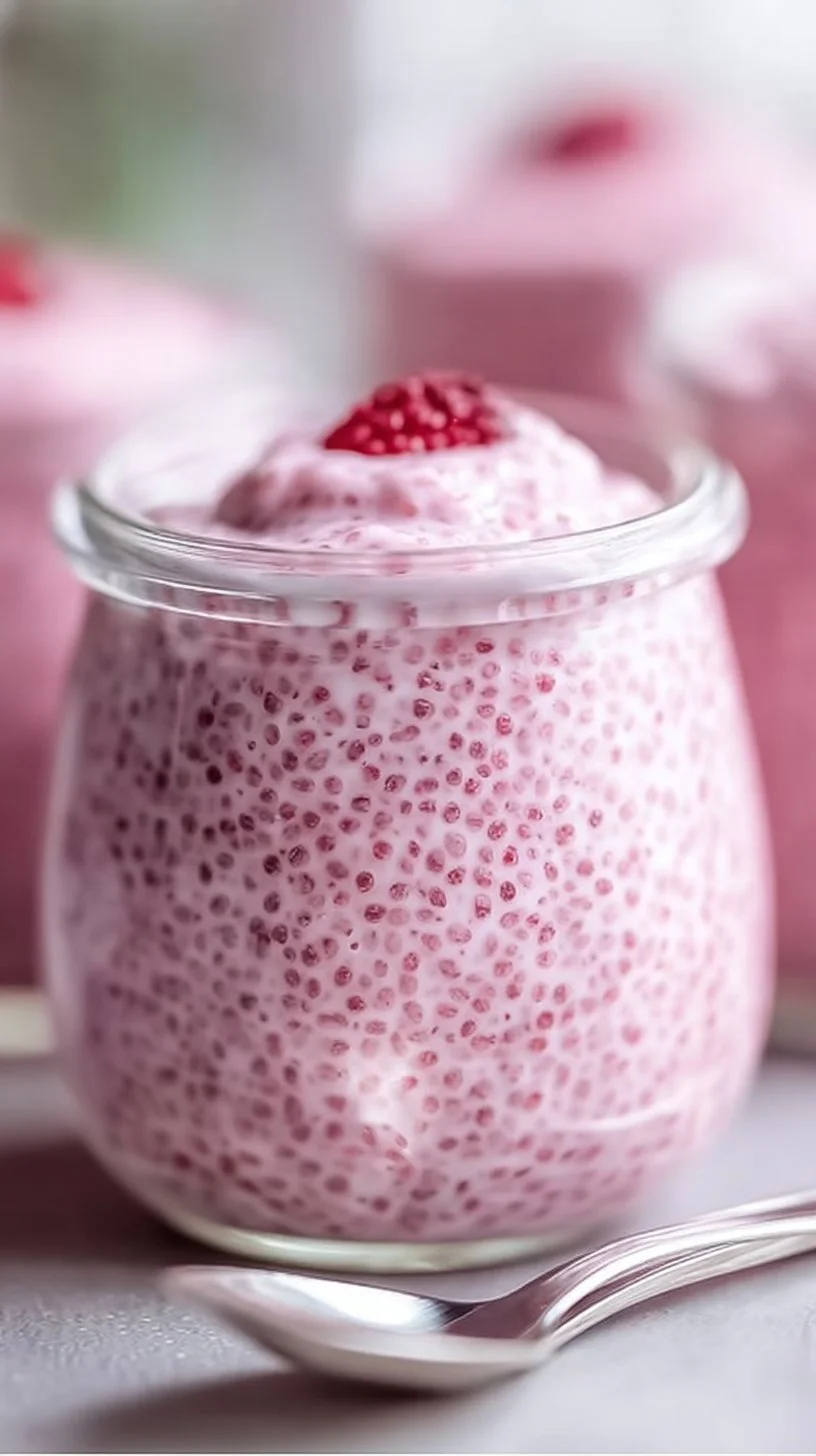
There is a certain tenderness to mornings that travel teaches you: the hush before market stalls open, the cool breath of a sea-borne wind, the scent of woodsmoke drifting from a distant alley. A simple bowl of Raspberry Chia Pudding Sweetened with Maple Syrup carries that tenderness across continents. It is a dish that tastes like slow arrival — the memory of a seaside inn in Nova Scotia, the bright doorway of a Provençal patisserie at dawn, or the quiet kitchen of a friend who insists on serving something wholesome before you set out into a new city. In those first spoonfuls the chia’s gentle gel meets the sharp sweetness of raspberries and the deep, resinous warmth of maple, and you understand why breakfast can feel like a map of a place’s heart.
As I wandered through farmers’ markets from Montreal’s Plateau to the orchards of Oregon, I found versions of this pudding appearing at communal tables and boutique cafés alike. It is the kind of recipe that invites conversation — about wild berries gathered on a hike, about the right time of year to tap a sugar maple, about the grandmother who once coaxed a porridge into a child’s hands. If you are looking for a recipe that will root you in season and place, this one asks you to pause, to taste slowly, and to remember where you were the first time the flavors came together. If you want to try a related cozy sweet treat, many readers of travel kitchens I meet love the nostalgic spice of chewy maple cinnamon cookies alongside a bowl like this.
The origin story & regional influence behind this dish
The story of chia seeds and their transformation into a silky pudding begins somewhere else entirely from where maple syrup and raspberries are most celebrated. Chia, once prized by the Aztecs and Mayans, was a valued seed — a small, unassuming grain that sustained warriors and travelers. Its ability to bind with water and swell into a gel made it a practical, nourishing ingredient for long journeys across Mesoamerica. When modern cooks embraced chia as a pantry secret, they revived an ancient technique in a new, globally mobile form: a cold, spoonable pudding that is equal parts ritual and relief.
Maple syrup, by contrast, ties us to the cold-snap landscapes of northeastern North America. Indigenous peoples of that region first taught European settlers how to harvest sap and boil it down to a deep, amber syrup — a process that smells of sap and smoke and patient fire. Raspberries, with their bright tartness, travel easily between temperate gardens and wild hedgerows in both hemispheres; their presence in a bowl evokes hedgerow foraging in Britain, mountain berries plucked on a Swiss hike, and roadside stands in Vermont.
This pudding, then, is a meeting of trades and terrains: Central American seed memory, northern forests’ maple amber, and the universal sweetness of red berries. The combination feels modern but grounded, like many dishes that move from local tradition to global table without losing the specific places that shaped them.
How to make Raspberry Chia Pudding Sweetened with Maple Syrup
There is a domestic ritual to making this pudding: the deliberate measure, the patient waiting, the small pleasures of stirring. It is a recipe that prefers attentive slowness to showy technique — the kind of thing you make the night before a long trip, or on a Sunday when the light in your kitchen invites small ceremonies. Below are the exact ingredients and directions; follow them as written and allow the pudding to do the rest.
Ingredients :
1/4 cup chia seeds, 1 cup unsweetened almond milk (or milk of choice), 2 tablespoons pure maple syrup, 1/2 teaspoon vanilla extract, 1/2 cup fresh or frozen raspberries (plus more for topping), Sliced almonds or chopped nuts, Shredded coconut, Extra drizzle of maple syrup
Directions :
- Mix the Ingredients: Combine almond milk, maple syrup, and vanilla in a bowl or jar. Stir until well mixed. Add chia seeds and stir again to prevent clumping., 2. Mash the Raspberries: Fold in raspberries, pressing some against the bowl to release juice., 3. Let It Set: Cover and refrigerate for at least 2 hours or overnight. Stir occasionally to check the texture., 4. Serve and Enjoy: Top with extra raspberries, nuts, shredded coconut, and a drizzle of maple syrup before serving.
Ingredients through a cultural & historical lens
Look at each ingredient and you encounter a mini-history. Chia seeds, tiny and ancient, speak of time-tested nourishment; they were once currency of sorts, and a source of stamina. Almond milk, a centuries-old Mediterranean alternative to dairy, traveled across cultures and became a symbol of plant-based adaptability — a reminder of monastic kitchens and medieval feasts where nut milks softened spices and preserved flavors for those who fasted. Maple syrup is a living history lesson: the tree-tapping tradition preserves Indigenous knowledge and a landscape’s winter-to-spring rhythm. Raspberries are the wild, seasonal punctuation in the bowl — a reminder that fruit does not merely sweeten but also narrates the season.
Then there are the toppings: sliced almonds and shredded coconut both tell migration stories. Almonds evoke the dry valleys of California and the orchards of Spain; coconut, once an island luxury, now moves freely in trade and taste, a hint of the tropics folded into temperate breakfasts. Each component carries a provenance and a memory, and together they create a contemporary tableau that is both global and intimate.
Cooking the dish: sensory notes & traditional techniques
To prepare this pudding is to practice patience. Stirring the chia into the almond milk, you will see the seeds sink and then slowly swell, their surfaces catching light like tiny moons. After they rest, the mixture develops a gentle, tapioca-like texture; it is silk and chew, soft resistance with each spoonful. The raspberries, when folded in and slightly mashed, release a perfume of green acidity and sun-warmed sugar that brightens the maple’s deeper, earthy notes.
Traditional techniques worth honoring are simple: use a clear jar so you can watch the gel form; mash a few raspberries against the jar’s wall to let their juice streak into the pudding rather than blending it uniformly — the result is visually poetic and varied in flavor. Refrigeration is not merely functional here; it is the modern equivalent of setting a pot near a hearth to thicken — a slow finishing that lets textures settle and flavors harmonize.
When served, the contrast is crucial: the velvet sweetness of maple, the lemony bite of raspberry, the grainy pop of chia, and the crunch of nuts and coconut. Each mouthful should carry temperature contrast — cool pudding and room-temperature toppings — which is why this dish reads so well in cafés and long breakfasts in small inns.
How different regions prepare their version
Across regions, this pudding adapts like a good traveler. In the Northeast of North America, the maple is front and center; cooks speak of grade A amber and the way a particular harvest year tastes like smoke or floral honey. In California and much of the Mediterranean, almond milk is often replaced or complemented by whole-milk yogurts, lending a creamier, tangier profile; though the recipe here keeps almond milk, the memory of those versions informs the palate. In tropical settings, shredded coconut moves from topping to a stirred-in element, and local fruits — mangos or passionfruit — may stand in for raspberries when they are not in season, a reminder of how people fold local abundance into a global idea.
In urban, health-conscious cafés from Tokyo to Berlin, chefs will layer the pudding with granola and fruit compotes, creating parfaits that are as visually deliberate as they are nourishing. But even where embellishment is common, the heart of the pudding remains: a chilled, seeded custard enlivened by fruit and sweetened thoughtfully.
Traditional ways this dish is shared or served
This pudding lends itself to hospitality. In the countryside, a host will bring a small jar to a guest’s bedside on a chilly morning, the lid clinking softly as the breakfast is presented. At potlucks and long-table lunches, it is spooned from a communal vessel, the garnish chosen by whoever sits at the head of the table. In cafés, it arrives in a glass with a spoon tucked in, and strangers might compliment the choice and begin a conversation that becomes the map for the rest of your day.
It is also a dish of seasons. In spring, when maple season is still in memory and raspberries are first green buds, the pudding is an ode to transition. In late summer, when berries are at their most abundant and the trees are already thinking ahead to sap, the same bowl becomes a celebration of harvest. Sharing it is sharing time: time spent gathering ingredients, time spent letting flavors marry, and the quiet time of eating together.
For a playful pairing during Easter, some hosts nest this pudding among little cheesecakes and chocolate eggs, creating a table of contrasts where lightness and richness converse; a recommended companion in those gatherings is a selection like mini Easter cheesecakes with chocolate eggs to balance tradition and novelty.
Storing the dish without losing its cultural essence
Storage is a modest act of cultural preservation. Keep the pudding in glass jars with snug lids; the jars speak of market stalls and packed lunches. Refrigerated, the base will hold its texture for up to three days, though the raspberries may darken slightly — a reminder that fruit, like memory, evolves. If you plan to travel with the pudding, choose sturdy jars tucked among other provisions, and bring along a small packet of toasted nuts to sprinkle on upon arrival, so the crunch is fresh.
Freezing is not recommended for texture, but the concept of making a larger batch and sharing it — leaving bowls on doorsteps for neighbors, or presenting jars as gifts at housewarmings — is a way to keep the recipe social and rooted in the idea of hospitality. The ritual of top-and-serve before eating reproduces the act of care that gave the pudding its flavor in the first place.
For a contrasting sweet that still honors toasted notes and nuts, readers often pair it seasonally with flavors from a savory counterpoint like garlic butter steak with parmesan cream sauce at heartier communal meals.
Cultural questions people often ask
Who “owns” a recipe like this? It’s a common question and a delicate one. The pudding is an amalgam — chia from ancient Mesoamerica, maple from North American woodlands, raspberries from hedgerows across the temperate world — and so it belongs to the long arc of exchange and adaptation. To honor it is to acknowledge those roots: to credit Indigenous knowledge of tree-tapping, to remember the seeds’ ancestral uses, and to celebrate the movements of people and crops.
Can it be a main course? In many cultures, a sweet, nourishing porridge is a meal unto itself. This pudding can be a sustaining breakfast, a light supper, or a restorative snack for travelers between destinations. Is it a dessert? Yes, sometimes — especially when layered with chocolate or indulgent toppings, a practice common in urban cafés where indulgence meets health.
People also ask about seasonal substitutions and how to keep the core intact: the rule I offer is gentle — honor texture and balance. Keep the gel of chia, the acidity of berries, and a warm sweet element like maple or a local analogue. In that structure, variations become regional dialects rather than rewrites.
A closing note on food, memory & travel
Food remembers for us. A spoonful of this raspberry chia pudding might transport you to a bus ride through maple country, to a terrace overlooking lavender fields, or to a friend’s cluttered kitchen where you learned the rhythm of another household. As a traveler and storyteller, I find that simple recipes like this are the best maps: they show you how flavors cross borders and how domestic rituals persist even as the world turns.
If you wish to read more about variations and presentation ideas that echo the pudding’s spirit, there are delightful interpretations across the web that pair its tart berry note with other textures and treats, including versions that explore chocolate accents and plant-based twists.
Conclusion
For a practical guide to a classic take on this recipe, see the thoughtful notes and step-by-step presentation at Raspberry Chia Pudding, which complements the gentle traditions described above. For those intrigued by a richer, more indulgent counterpoint that still respects plant-based principles, a creative variation can be found in this inspired take on raspberry chia with a chocolate finish at raspberry Chia Seed Pudding with Dark Chocolate Ganache, Vegan.
Raspberry Chia Pudding
Ingredients
Method
- Combine almond milk, maple syrup, and vanilla in a bowl or jar. Stir until well mixed.
- Add chia seeds and stir again to prevent clumping.
- Fold in raspberries, pressing some against the bowl to release juice.
- Cover and refrigerate for at least 2 hours or overnight. Stir occasionally to check the texture.
- Top with extra raspberries, nuts, shredded coconut, and a drizzle of maple syrup before serving.