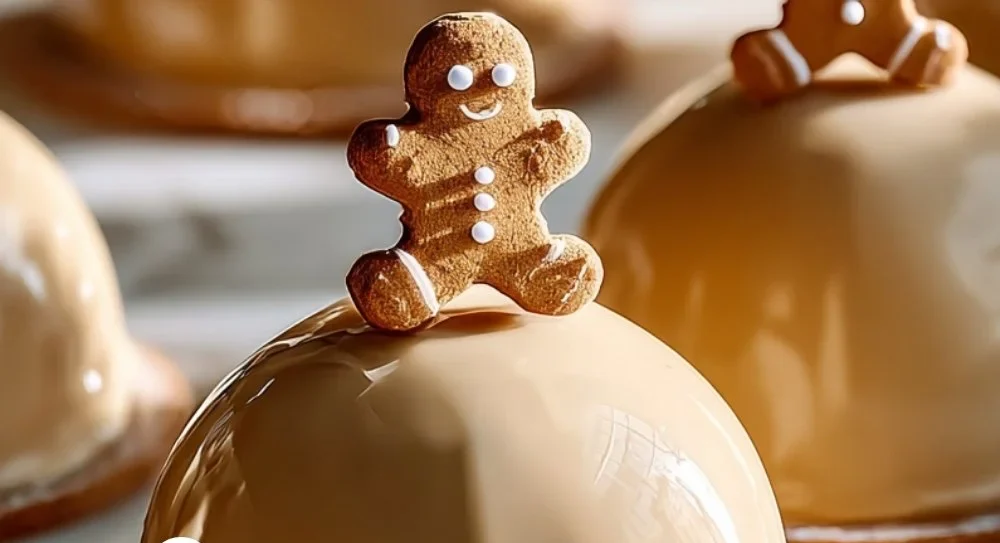
Gingerbread Latte Mousse Domes
Introduction
On a late autumn afternoon in a city that wears its winters like a soft coat, I first met a dessert that tastes like memory: Gingerbread Latte Mousse Domes. The name itself is an invitation — gingerbread for the warm, molasses-rich past of family kitchens; latte for the bitter-sweet wakefulness of cafés where strangers trade confidences over steam; mousse domes for the delicate architecture of modern patisserie. I call this introduction “SOFIA” as a small, private ritual — an opening to a story that folds travel, aroma, and human intimacy into a single bite.
I remember holding a dome between my fingers as fog settled around the square and a street vendor lit a single lamp. The mousse trembled when I nudged it; the chocolate shell crackled softly like a whispered secret. The first mouthful was a passage: a memory of gingerbread baked beside a radiator in a northern town, a memory of espresso pulled at dawn in a seaside café, a memory of hands that taught me to say grace before dessert. When a dish is named like a travelogue, you read it with your senses before your eyes. These mousse domes are, for me, a map of small winter rituals stitched across continents.
The origin story & regional influence behind this dish
Gingerbread and coffee have traveled together long before the mousse dome made its entrance into elegant pastry shops. Ginger and other warming spices come from ancient trade routes that threaded through the Middle East and into Europe, carrying aromas that would transform cakes and breads into talismans of comfort. Coffee, too, migrated from the highlands of Ethiopia through Ottoman houses and European salons, eventually infiltrating the everyday ritual of the modern café. The union of gingerbread and coffee is not a recent whim; it is an echo of centuries where spices and beans met at markets, private tables, and festive kitchens.
The mousse dome as a shape has a more recent, cosmopolitan pedigree. It belongs to the language of contemporary European patisserie — clean lines, glossy coatings, and surprising interiors — yet the flavors inside are vernacular, reminding one of hearthside kitchens from Scandinavia to the American Midwest. In Northern Europe, gingerbread (pepparkakor, lebkuchen) has been a seasonal mainstay for centuries; in Italy, mascarpone and coffee combine in beloved desserts. The Gingerbread Latte Mousse Dome lives where these traditions overlap: it is patisserie elegance dressed in folk spices and café culture. Each dome is a tiny cultural negotiation, a handshake between the conviviality of coffeehouses and the intimacy of home-baked spice cakes.
How to make Gingerbread Latte Mousse Domes
Before I tell you the cultural threads and sensory guide of this dessert, here is how to make it — simply and without artifice — exactly as the recipe prescribes.
Ingredients :
1 cup heavy cream, 1/2 cup mascarpone cheese, 1/4 cup brewed coffee, 1/2 cup sugar, 1 teaspoon vanilla extract, 1 tablespoon ground ginger, 1 teaspoon ground cinnamon, 1/2 teaspoon ground nutmeg, 1 tablespoon gelatin, 1/4 cup cold water, Chocolate or glaze for topping
Directions :
- In a mixing bowl, whip the heavy cream until soft peaks form., 2. In another bowl, mix mascarpone cheese, brewed coffee, sugar, vanilla extract, ginger, cinnamon, and nutmeg until smooth., 3. In a small bowl, dissolve gelatin in cold water and let it bloom for a few minutes., 4. Heat the bloomed gelatin gently until melted, then incorporate it into the mascarpone mixture., 5. Gently fold the whipped cream into the mascarpone mixture until combined., 6. Pour the mousse into dome-shaped molds and refrigerate for at least 4 hours until set., 7. Once set, carefully remove the mousse domes from the molds., 8. Top with a shiny glaze or chocolate shell., 9. Serve chilled and enjoy your festive dessert!
Ingredients through a cultural & historical lens
When I read the list of ingredients, I do not see mere components; I see stories. Heavy cream whispers of dairy farms where mornings begin with the same ritual of milking that has unspooled for generations. Mascarpone, a regional Italian cheese, brings the soft, slightly tangy richness of Lombard kitchens. Brewed coffee is a global ambassador — bitter and aromatic, it carries a lineage that includes Ethiopian highlands, Yemeni ports, and Viennese cafés. Sugar binds these elements into a sweetness that has its own history of labor and exchange.
The spices — ginger, cinnamon, nutmeg — are the very essence of global entanglement. Ginger speaks of tropical gales and merchants who crossed oceans; cinnamon comes from bark that was once worth more than gold; nutmeg was the cause of wars and empires. Gelatin is a modern convening agent that allows these histories to take the refined dome shape of contemporary pastry. As a combination, these ingredients read like a condensed history of taste: hearth and trade, dairy and coffee culture, craft and convenience, all intersecting on a small plate.
Cooking the dish: sensory notes & traditional techniques
Making these domes is less about technical prowess and more about attention to sensation. The whipped cream should be as light as a cloud; you feel it lift on the whisk like a winter mist. Mascarpone brings a velvet density that perfumes itself with the brewed coffee and the spice ground into it. Folding the cream into the mascarpone is a gentle choreography — slow, deliberate, respectful of texture — and it insists that you listen to the mixture, not the clock.
When the gelatin blooms and melts, it performs an alchemical trick: liquid becomes structure. That transition is not merely chemical; it is ceremonial. For many families in colder regions, setting desserts is part of holiday patience, a quiet practice that allows time for stories to be told and for guests to arrive. The final glaze or chocolate shell is the moment of reveal — glossy, mirror-like, it reflects a face leaning over the plate. The interplay of soft mousse and crisp shell, of warm spices and cool cream, writes a sensory narrative that resonates long after the plate is cleared.
How different regions prepare their version
Travel through Europe or across the Atlantic and you will find variations of this flavor conversation. In Northern Europe, where gingerbread is integral to winter markets, versions may use darker molasses and a higher ratio of warming spices, invoking childhood windows fogged with breath. In Italy, you might discover a cappuccino-tinged take, where espresso concentrates replace brewed coffee and mascarpone is emphasized for its creamy authority. In the United States, pastry chefs play with the shell — salted chocolate, caramelized topping, or a drizzle of aged rum syrup — each addition hinting at local palates and pantry customs.
In Asian cities with a long history of tea culture, the latte element sometimes gives way to tea-inflected mousse, while spices are adjusted to local taste. In the Middle East, one could imagine an adaptation where rosewater or cardamom softens the spice profile, connecting the dome to centuries of fragrant sweets. These regional translations do not dilute the original’s identity; they expand it, like a dialect enriching a language.
Traditional ways this dish is shared or served
The Gingerbread Latte Mousse Dome lends itself to small, intimate gatherings. It is not a dessert to be scooped but to be presented: a dome perched on a small plate, perhaps with a dusting of cocoa or a sprig of crystallized ginger. In many traditions, desserts punctuate rituals — a toast before the first bite, a story told while spoons rest. In northern climes, this dessert might arrive after a long, brisk walk, the chilled sweetness a balm against the cold. In café culture, a single dome beside a steaming cup becomes an afternoon’s excuse to linger.
Some households reserve such desserts for holidays, where each dome becomes a keepsake of communal warmth. Others treat it as an object of hospitality: a host offering a small dome is offering time and care. The format — individual domes — also speaks to modern notions of presentation and dignity; everyone at the table receives their own jewel, a small rite that recognizes each guest.
Storing the dish without losing its cultural essence
Preservation is an act of respect. These domes should be refrigerated, protected from odors that would betray their delicacy. A shallow cloche or a covered container keeps the glaze glossy and the spices true. If you must transport them, keep them on a level surface and avoid temperature shocks; the glaze may weep and the mousse can soften, losing the crisp counterpoint that makes the dome memorable.
But remember: storage is also preservation of story. Label the container with a note if it carries a memory — who made it, when, why — so that the dessert remains tied to its human context. In many cultures, the act of gifting food is about continuity: a preserved tart becomes a letter; a stored cake becomes the promise of another gathering.
Cultural questions people often ask
Is this dessert traditional? It depends how you measure tradition: in its individual components, yes — gingerbread and coffee are deeply rooted; in its dome form, it is contemporary. People ask whether the mousse should be stiff or soft, whether spices can be varied, whether the chocolate shell is necessary. Each question reveals a desire to anchor a new ritual to an older one. Others ask about substitutes for gelatin due to dietary or ethical choices: modern cooks answer with plant-based gelling agents, yet for many, the original gelatin is part of a particular texture memory.
Another common curiosity concerns seasonality: why is this dessert associated with winter? Spices were historically expensive and often reserved for feasts and festivals; their warmth symbolized comfort against cold nights. Coffee connotes gathering and wakefulness. The dome, glossy and ceremonious, signals celebration. People ask because food is how we map time and meaning.
A closing note on food, memory & travel
Food is a vessel for stories, and the Gingerbread Latte Mousse Dome is a small, elegant vessel. It carries the warmth of spice routes, the communal hum of cafés, the intimate patience of setting a dessert, and the modern desire to make each serving a moment of beauty. In my travels, I have eaten versions of this dish in hotel lounges, private kitchens, and open-air markets, each time noting how place refracts flavor.
We travel not only to see new landscapes but to taste them. Every morsel is a memory waiting to be unearthed. If you make these domes, let them be more than a recipe followed; let them be an invitation to tell stories, to remember faces and streets, to mark an evening with something small and ceremonial. In a world that moves quickly, the slow set of a mousse dome is a countercultural act: patience, care, and the pleasure of sharing.
Conclusion
If you want to explore a recipe page with a similar festive spirit and presentation, the recipe titled Gingerbread Latte Mousse Domes – A Gourmet Holiday Dessert offers a visual companion to the flavors described here. For another take and additional context, see the compilation at Gingerbread Latte Mousse Domes – Yeyfood.com: Recipes, cooking.
May each dome you make be a small bridge: between seasons, between strangers, and between the kitchens that raised you and the plates that now travel with you.
Gingerbread Latte Mousse Domes
Ingredients
Method
- In a mixing bowl, whip the heavy cream until soft peaks form.
- In another bowl, mix mascarpone cheese, brewed coffee, sugar, vanilla extract, ginger, cinnamon, and nutmeg until smooth.
- In a small bowl, dissolve gelatin in cold water and let it bloom for a few minutes.
- Heat the bloomed gelatin gently until melted, then incorporate it into the mascarpone mixture.
- Gently fold the whipped cream into the mascarpone mixture until combined.
- Pour the mousse into dome-shaped molds and refrigerate for at least 4 hours until set.
- Once set, carefully remove the mousse domes from the molds.
- Top with a shiny glaze or chocolate shell.
- Serve chilled and enjoy your festive dessert!