Strawberry Banana Pudding Dream
Introduction
As a nutrition specialist, I look at recipes through the lens of nourishment, digestion, and long-term balance. Strawberry Banana Pudding Dream is a classic layered dessert that combines familiar comfort ingredients—vanilla wafers, bananas, strawberries, pudding, cream cheese and whipped topping. It’s often served at family gatherings and holidays, and with a few mindful choices it can fit into a balanced eating pattern. In this article I’ll walk you through why the ingredients matter, how the preparation affects nutrition, and practical ways to enjoy this dessert while supporting digestion and overall wellness. My goal is to give clear, evidence-based guidance in plain language so you can make informed choices that suit your health goals and lifestyle.
How this recipe supports overall wellness
This recipe brings together fruit, dairy and carbohydrates, offering a mix of quick energy and some protein and fat. Bananas and strawberries provide fiber, vitamins and antioxidants—elements that support digestion, satiety and cellular health. Dairy-based components contribute calcium and protein, which are important for bone health and for helping meals feel more satisfying. When enjoyed as part of a varied diet, desserts like this can support psychological well-being by allowing pleasurable foods without derailing overall nutrient balance.
From a practical perspective, the recipe is portion-flexible: you can serve small portions to enjoy sweetness without excess calories, or serve a larger portion occasionally as part of a social meal. The key to wellness is patterns over time—regularly emphasizing nutrient-dense foods and including treats in a measured, mindful way supports long-term adherence and satisfaction.
How to make Strawberry Banana Pudding Dream
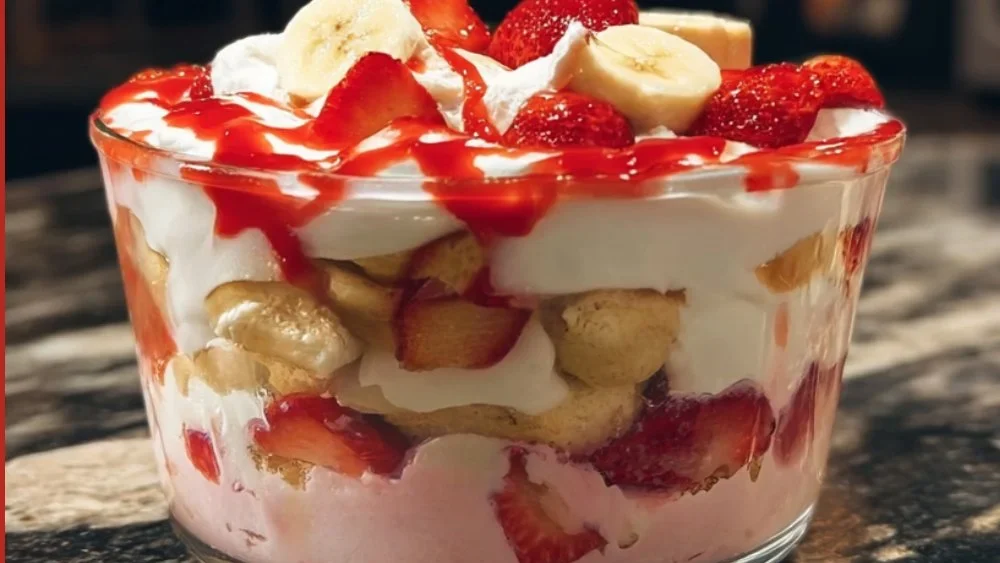
This recipe is built on simple layering—crisp vanilla wafers, ripe bananas and strawberries, and a creamy pudding-cream cheese mixture finished with whipped topping. The structure makes it easy to prepare ahead; chilling time helps the layers set and flavors meld, which can improve digestibility and enjoyment. Because the dessert sits cold, it’s a good option for warm-weather gatherings and for preparing the night before, reducing stress on the day of serving. Below I include the exact ingredients and directions for your use.
Ingredients :
2 boxes Vanilla Wafers, 6 to 8 bananas, sliced, 2 cups milk, 1 container strawberries, 1 (5 oz.) box French Vanilla pudding, 1 (8 oz.) package cream cheese, 1 (14 oz.) can sweetened condensed milk, 1 (12 oz.) container whipped topping
Directions :
In a mixing bowl, combine the cream cheese and sweetened condensed milk until smooth., Add the French Vanilla pudding and milk to the mixture and stir until well combined., In a large serving dish, layer the vanilla wafers, followed by a layer of sliced bananas and strawberries., Pour half of the pudding mixture over the fruit and wafers., Repeat the layers with the remaining ingredients, finishing with the pudding mixture on top., Spread the whipped topping over the final layer and refrigerate for at least 4 hours before serving.
Nutrient roles of each main ingredient
- Vanilla wafers: These supply primarily carbohydrates and some fat. They act as a source of quick energy and provide texture contrast. While they are lower in micronutrients than whole grains, they are part of the dessert’s sensory appeal and can be balanced with nutrients from fruit and dairy.
- Bananas: Bananas provide natural sugars, potassium, vitamin B6 and dietary fiber—particularly pectin in ripe fruit—which supports steady digestion. The fiber helps slow the absorption of sugars from the dessert and contributes to feelings of fullness.
- Strawberries: Strawberries are low in calories and rich in vitamin C, antioxidants and fiber. They add sweetness with relatively fewer sugars and provide phytochemicals that support overall cellular health.
- Milk & French vanilla pudding mix: The milk and pudding mix contribute protein, calcium and carbohydrates. Protein helps slow gastric emptying, which can modulate blood sugar response after eating.
- Cream cheese & sweetened condensed milk: These ingredients make the dessert creamy and add saturated fat and concentrated sugars. Fat contributes to flavor and satiety, while the sugars increase caloric density.
- Whipped topping: Often primarily air and fat, whipped topping provides mouthfeel and a light finish. It contributes mostly calories from added sugar and fat, so portion size matters.
Understanding these roles helps you see the dish as a composite of quick energy (wafers and sweetened condensed milk) balanced with fiber, vitamins and some protein from fruit and dairy. That balance shapes both the immediate digestive response and the overall nutrient density of the dessert.
The preparation method & its health impact
Layering and chilling have practical effects beyond presentation. Allowing the dessert to rest in the refrigerator for at least four hours helps the wafers soften and absorb moisture from the pudding and fruit. Softer textures can be easier to chew and digest for many people. The chilled temperature also slows the perception of sweetness, which can make the dessert feel less cloying compared with warm, intensely sweet options.
However, letting the wafers sit too long can make them very soft and increase the glycemic response slightly because starch becomes more accessible when fully hydrated. To moderate that effect, serve the dish after it has chilled but not so long that all crispness is gone—this preserves some texture contrast and slows the rate at which carbohydrates are digested. Also, using milder portion sizes and pairing the dessert with a source of protein or fiber at the meal can blunt blood sugar spikes.
From a food safety perspective, because the recipe contains dairy and sliced fruit, proper refrigeration (below 40°F / 4°C) during the chilling period and prompt return to refrigeration after serving are important to minimize bacterial growth.
Ways to lighten, enrich or modify the dish nutritionally
While I will not change the recipe or exact steps you provided, here are evidence-based, optional strategies you can consider when preparing and serving the finished dish:
- Portion control: Serve smaller bowls or spoonfuls; a smaller portion often satisfies craving while reducing excess calories.
- Increase fruit proportion: When assembling, make the fruit layers slightly thicker relative to wafer layers. This raises fiber, vitamins and volume without changing the formal ingredients.
- Add texture with nuts: Offer a small sprinkle of chopped nuts on top at serving time for added protein, healthy fats and crunch—this is an optional garnish you can provide alongside the plated dessert.
- Use low-fat or lactose-free milk where appropriate: Substituting lower-fat milk can modestly reduce total saturated fat while keeping calcium and protein. If lactose sensitivity is a concern, lactose-free milk still provides the same nutrients with better tolerance for some people.
- Mindful sweetener adjustments: Because sweetened condensed milk and whipped topping are already sweet, reduce added sugary accompaniments or serve with plain Greek yogurt on the side to add protein and reduce sweetness per bite.
- Serve with a protein-rich accompaniment: A small portion of plain Greek yogurt or a handful of roasted chickpeas on the side of the meal can make the overall eating occasion more balanced.
All of these suggestions keep the original recipe intact but offer simple ways to adjust how the dessert fits into your overall meal pattern.
Pairing ideas for a balanced, complete meal
To turn a serving of Strawberry Banana Pudding Dream into part of a balanced meal, pair it with savory, nutrient-dense components earlier or alongside the dessert. Consider:
- A small leafy green salad with olive oil and lemon: This adds fiber, micronutrients and healthy monounsaturated fat.
- A lean protein main: Grilled fish, roasted chicken breast, or a plant-based protein like lentils will help balance blood sugar and increase satiety.
- Whole grain side or complex-carb choice: A modest portion of quinoa, brown rice or whole-grain bread earlier in the meal ensures sustained energy.
- Beverage choice: Water or unsweetened tea is ideal; avoid large sugary drinks that multiply the dessert’s sugar load.
If you’re serving this dessert at a gathering, plan the savory menu to emphasize vegetables and lean proteins so that dessert remains an enjoyable finish, not the central source of nutrients.
Safe storage, food safety & optimal reheating
Storage: Because this dish contains dairy and fresh fruit, store it in the refrigerator at or below 40°F (4°C). Keep it covered with plastic wrap or a lid to prevent odor transfer and moisture loss. Consume within 3–4 days for best quality and food safety.
Transport: If you’re transporting the dessert, keep it on ice or in an insulated cooler to maintain cold temperature until serving. Once served, do not leave at room temperature for more than two hours (one hour if ambient temperature is above 90°F / 32°C).
Reheating: This dessert is intended to be served chilled and should not be reheated. If you prefer components warm, consider serving small portions of warmed fruit alongside a chilled portion of the pudding, but avoid heating items with whipped topping or cream cheese as texture and food safety can be affected.
Signs to discard: If the dessert develops an off odor, visible separation, excessive liquid weeping beyond the expected or any signs of mold, discard it.
Common nutrition questions about this dish
- Is this dessert “unhealthy”? No single food is inherently healthy or unhealthy on its own. This dessert contains both nutrient-rich ingredients (fruit, milk) and higher-calorie components (sweetened condensed milk, wafers, whipped topping). When included occasionally and in reasonable portions, it can fit into a balanced diet.
- Will it spike blood sugar? The dessert contains sugars from fruit and condensed milk and refined carbohydrates from wafers. Pairing it with protein or consuming it after a balanced meal (with fiber and protein) can help moderate blood sugar response.
- Can people with lactose intolerance eat it? Lactose intolerance varies by individual. Lactose-free milk can be substituted when preparing the pudding base to reduce symptoms, or small portions may be tolerated by some. Because you requested the original recipe unchanged, consider lactose-free options only as a separate batch if needed.
- How many servings? Serving size depends on the dish size and occasion. A modest 1/2-cup to 3/4-cup portion is often satisfying; for gatherings, offer smaller portions so guests can enjoy a taste without excess.
- Is it suitable for children? Yes, in moderation. Be mindful of portion sizes and offer alongside nutrient-dense foods to ensure balanced intake.
Final wellness notes
Strawberry Banana Pudding Dream is a dessert with roots in communal meals and comfort eating. From a nutrition standpoint, it works best when viewed as a treat that complements an overall pattern of nutrient-rich foods. Focus on balance: emphasize vegetables, lean proteins and whole grains across the day, and allow room for foods that bring pleasure and social connection. Simple tweaks—like increasing fruit layers, controlling portion sizes, and pairing dessert with protein—help the dish contribute positively to satiety and digestive comfort without sacrificing enjoyment.
When planning meals, think in terms of patterns rather than perfection. Regularly including fiber-rich vegetables, whole proteins and minimally processed foods creates a foundation that allows for occasional desserts with enjoyment and minimal stress. If you have specific medical conditions (diabetes, kidney disease, food allergies), consult with a registered dietitian or your healthcare team to tailor serving frequency and portions to your individual needs.
Conclusion
For inspiration and variations that stay close to this classic, you might compare presentation ideas with recipes like My Favorite Southern Strawberry Banana Pudding or explore bar-style takes such as Banana Pudding Dream Bars. These resources can spark ideas for serving, layering and seasonal fruit choices while you keep your own portion and ingredient preferences in mind.
Strawberry Banana Pudding Dream
Ingredients
Method
- In a mixing bowl, combine the cream cheese and sweetened condensed milk until smooth.
- Add the French Vanilla pudding and milk to the mixture and stir until well combined.
- In a large serving dish, layer the vanilla wafers.
- Add a layer of sliced bananas and strawberries.
- Pour half of the pudding mixture over the fruit and wafers.
- Repeat the layers with the remaining ingredients, finishing with the pudding mixture on top.
- Spread the whipped topping over the final layer and refrigerate for at least 4 hours before serving.